

Before using Wuji Hand 2, read these safety notices and the 2.2 capability boundaries carefully to ensure safe operation and personal safety.
Power Safety
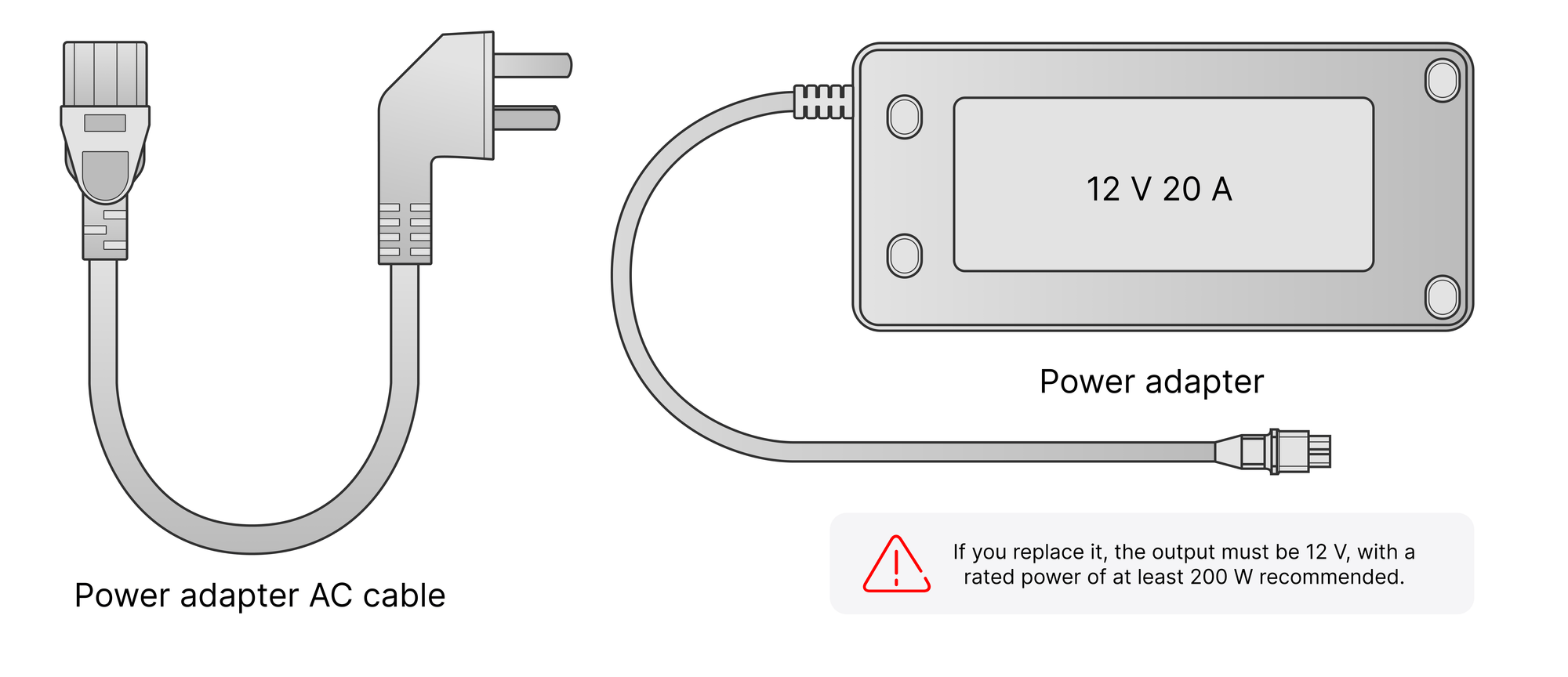
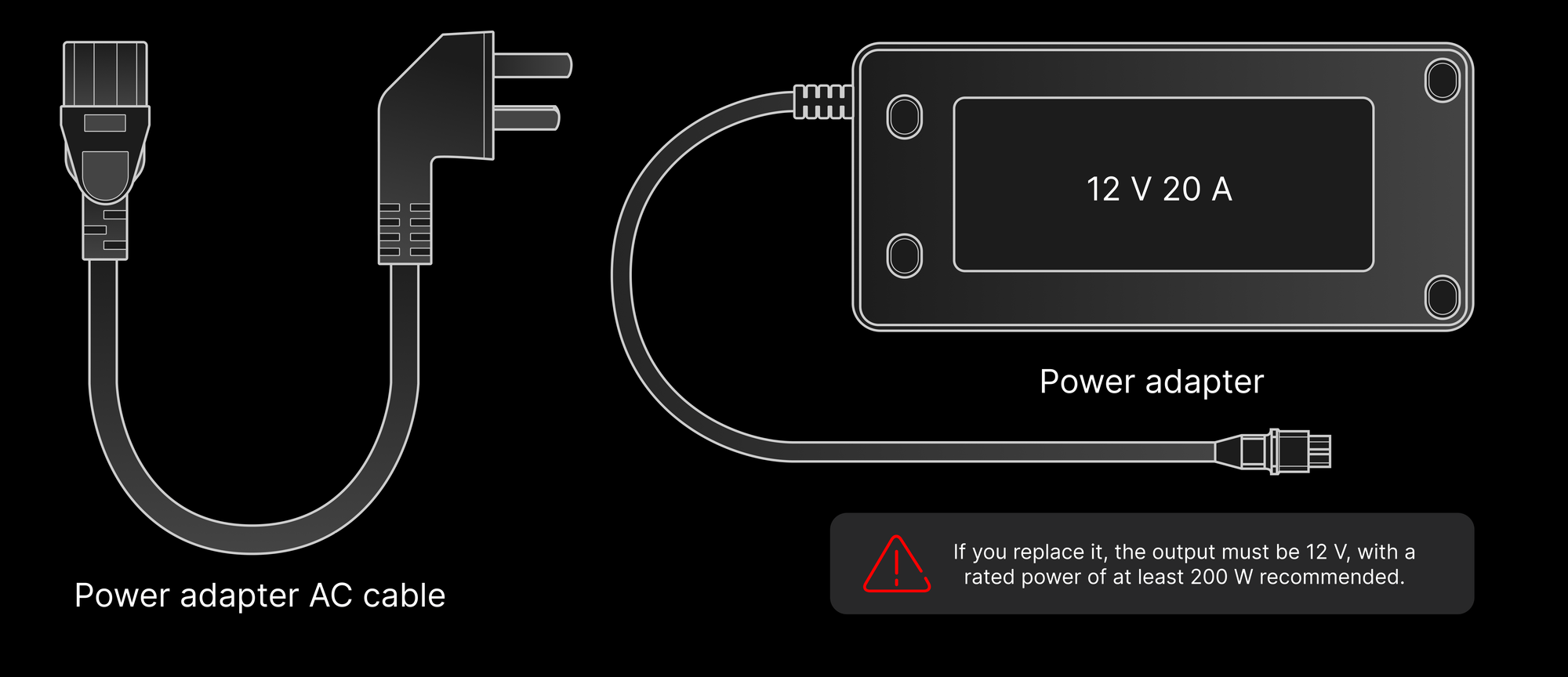
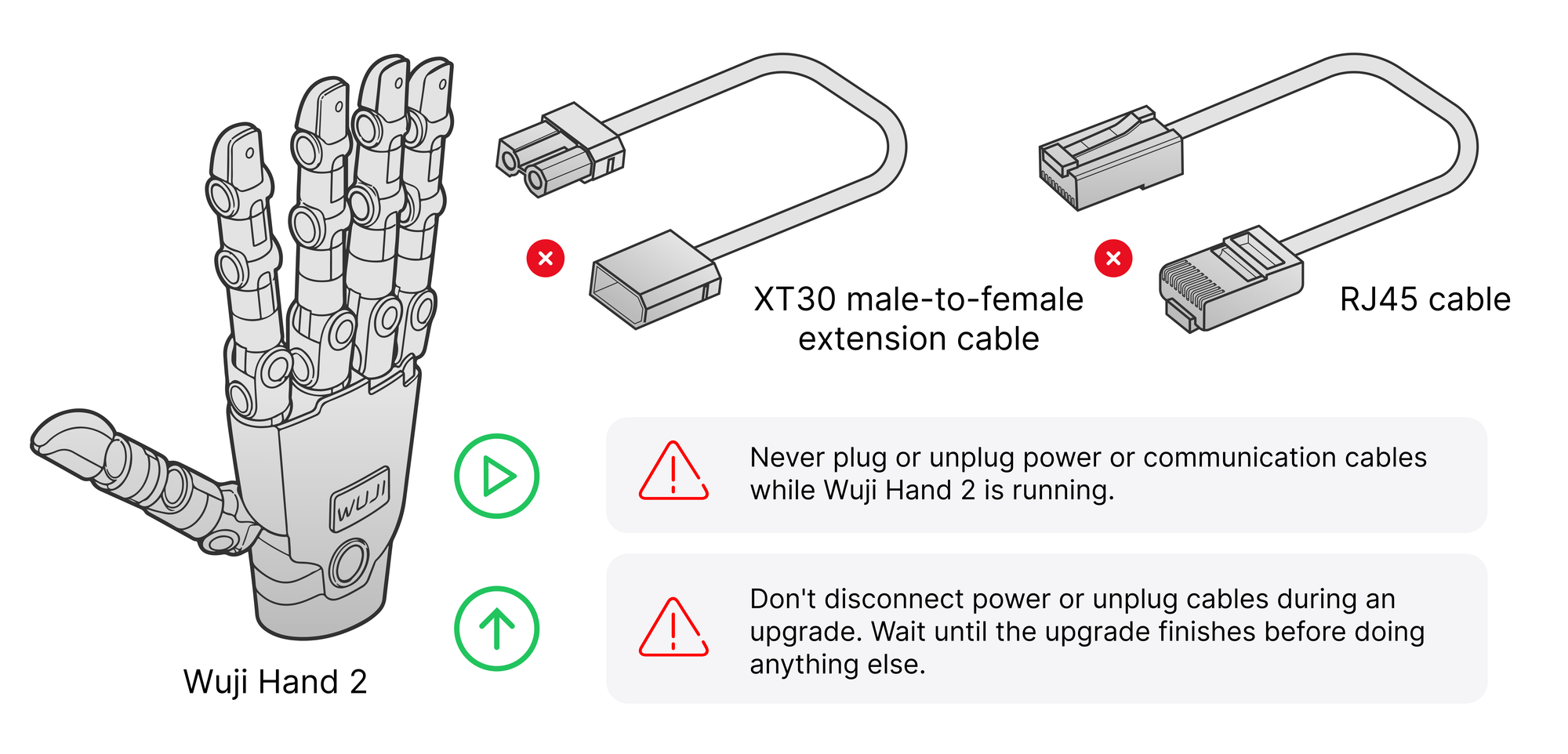
Power requirement: 11–13 V DC (12 V nominal) External harness: the wrist directly leads out two cables—XT30 + RJ45 network port Power adapter:- Use the official power adapter (12 V 20 A).
- If you replace it, use a supply with an output in the 11–13 V DC range. A nominal 12 V supply rated for at least 200 W is recommended.
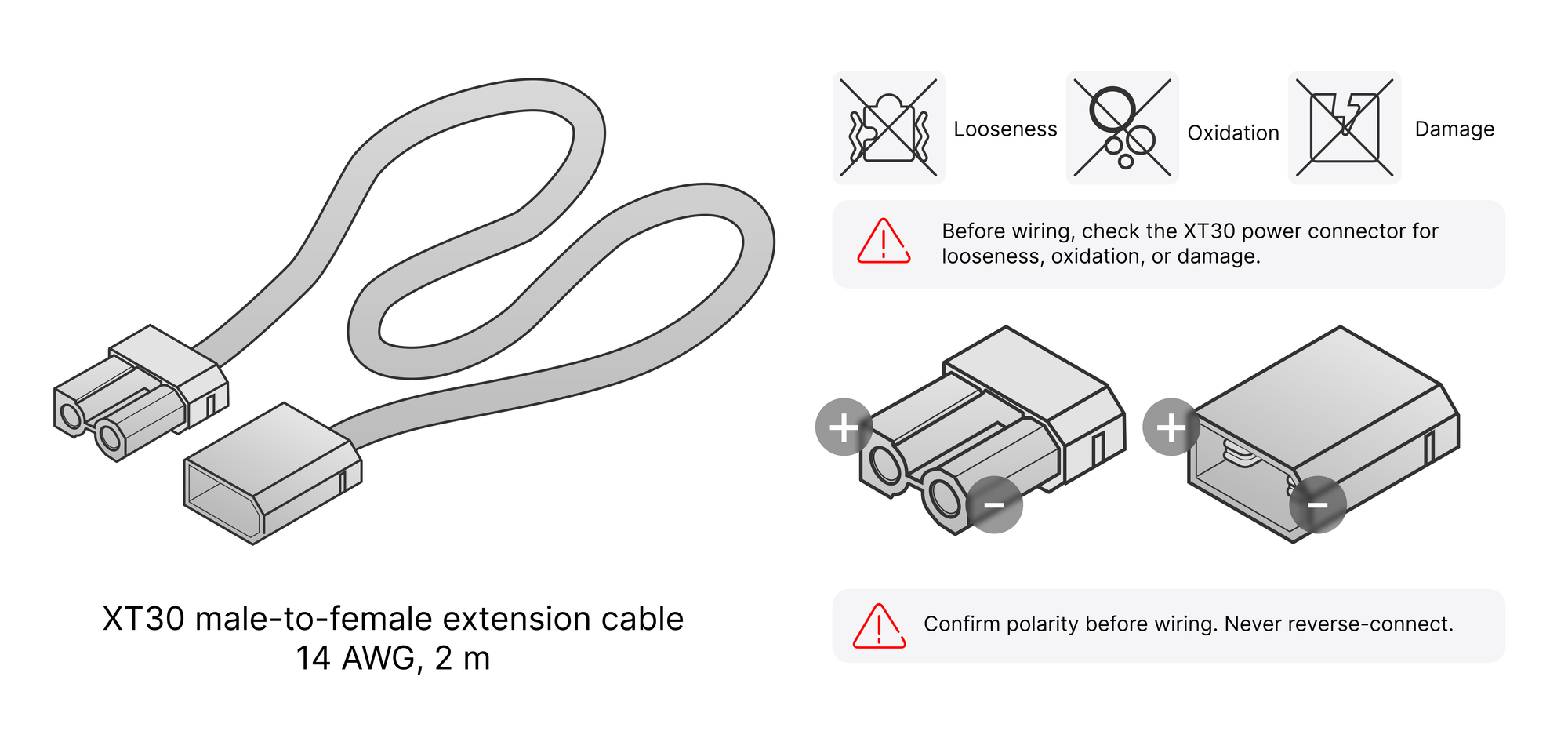
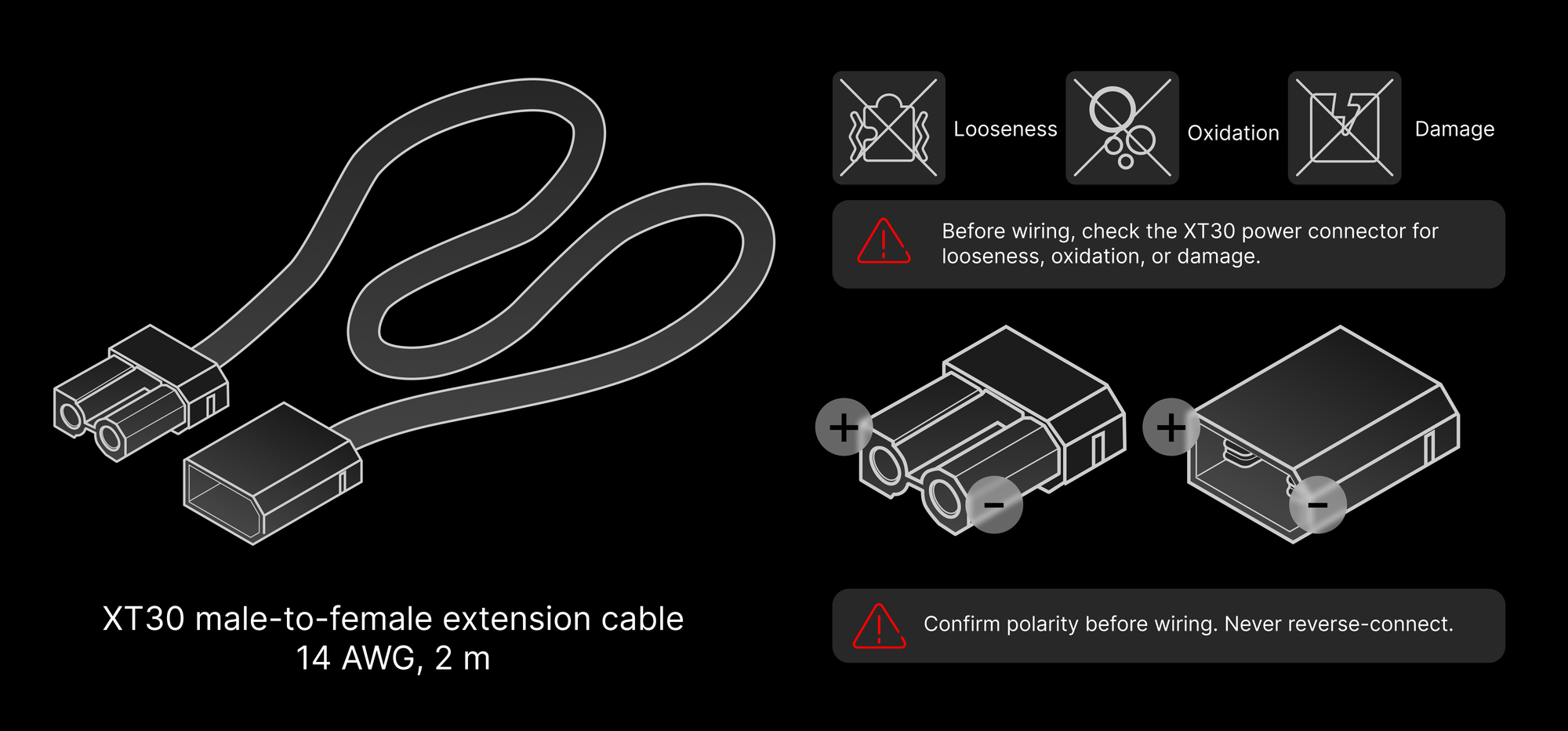
- Before wiring, check the XT30 power connector for looseness, oxidation, or damage.
- Confirm polarity before wiring. Never reverse-connect.
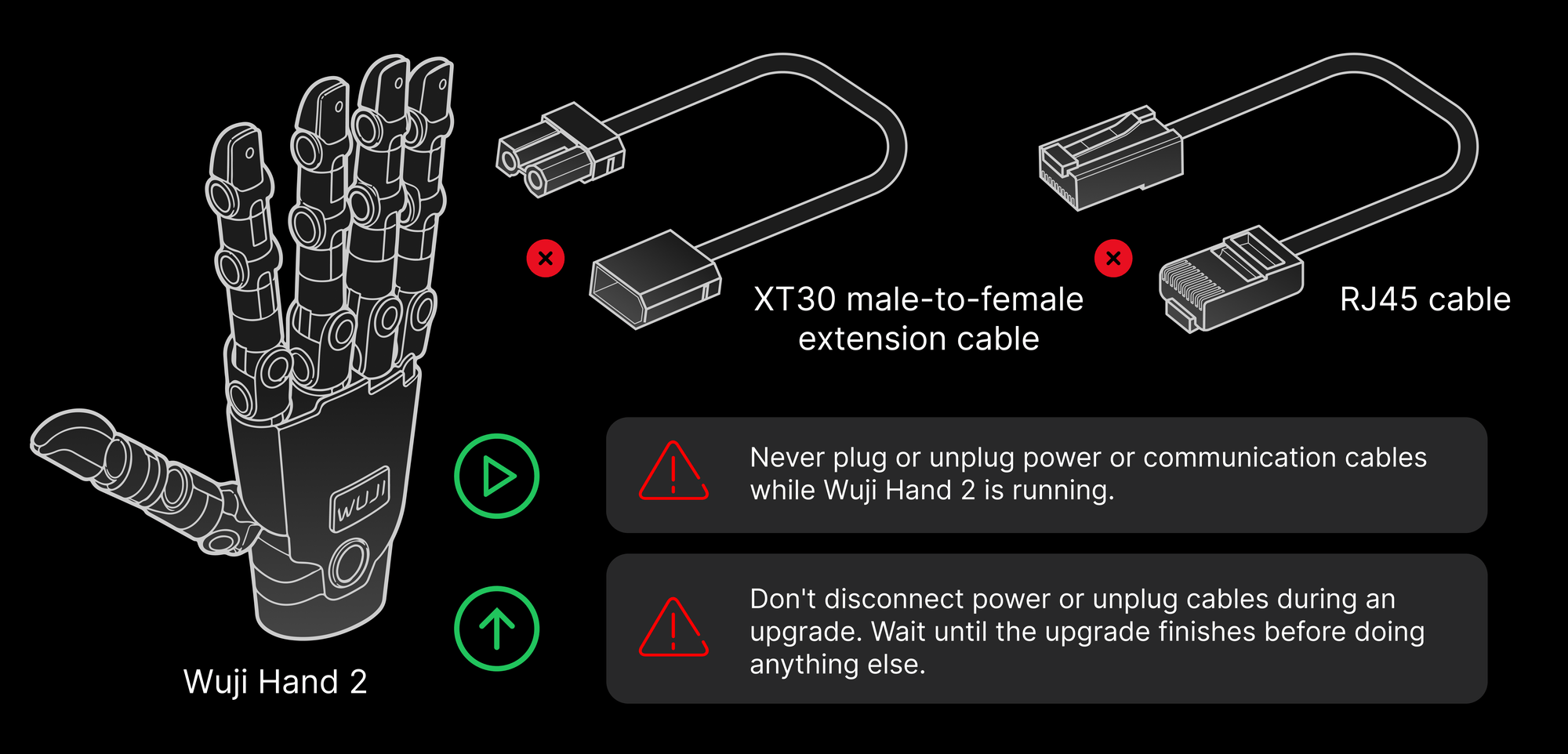
- Never plug or unplug power or communication cables while Wuji Hand 2 is running.
- Power off the device when it isn’t in use.
- Before disconnecting power, stop motion and confirm the hand is at rest.
- Don’t disconnect power or unplug cables during an upgrade. Wait until the upgrade finishes before doing anything else.
Mechanical Operation Safety
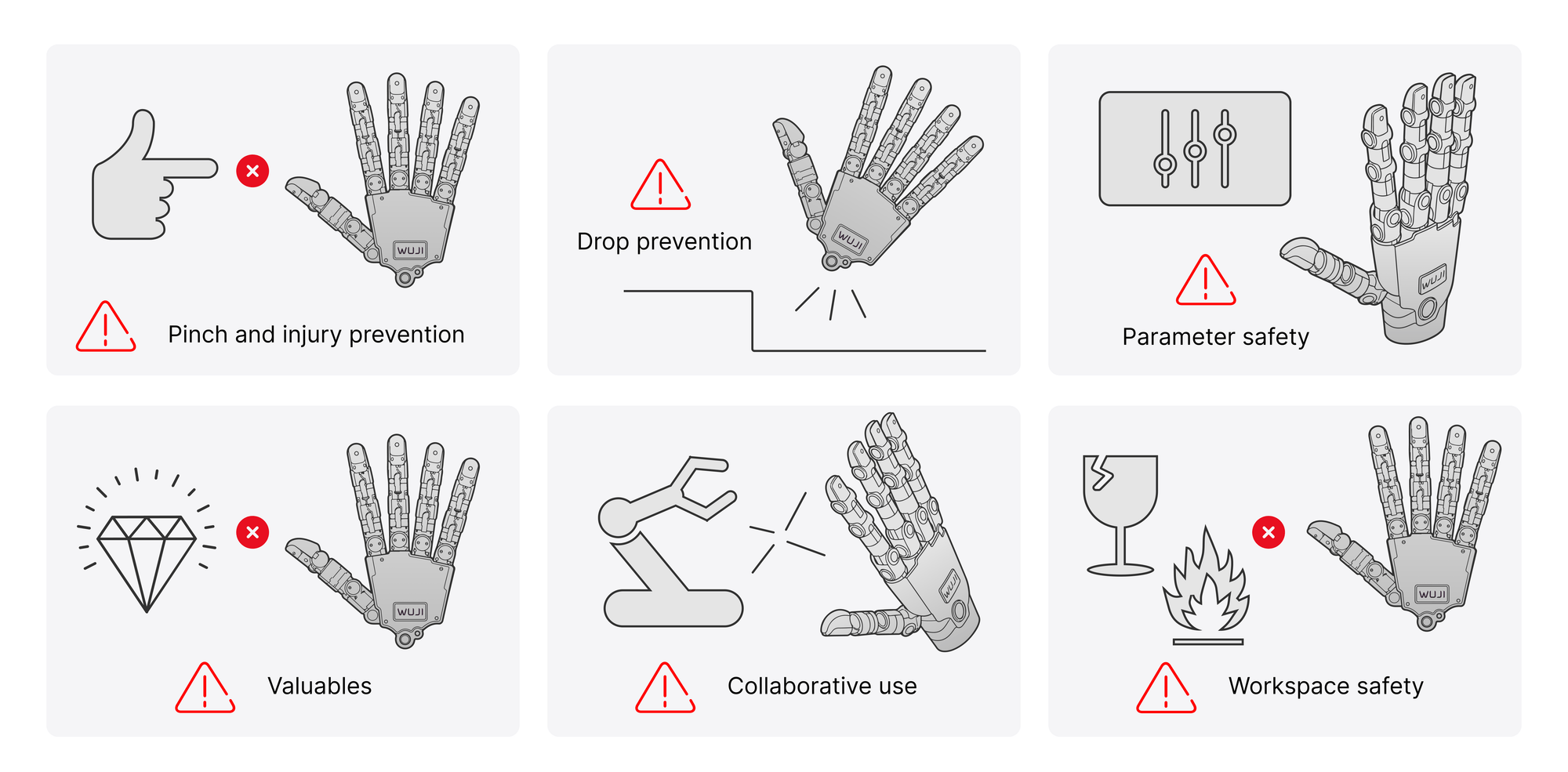
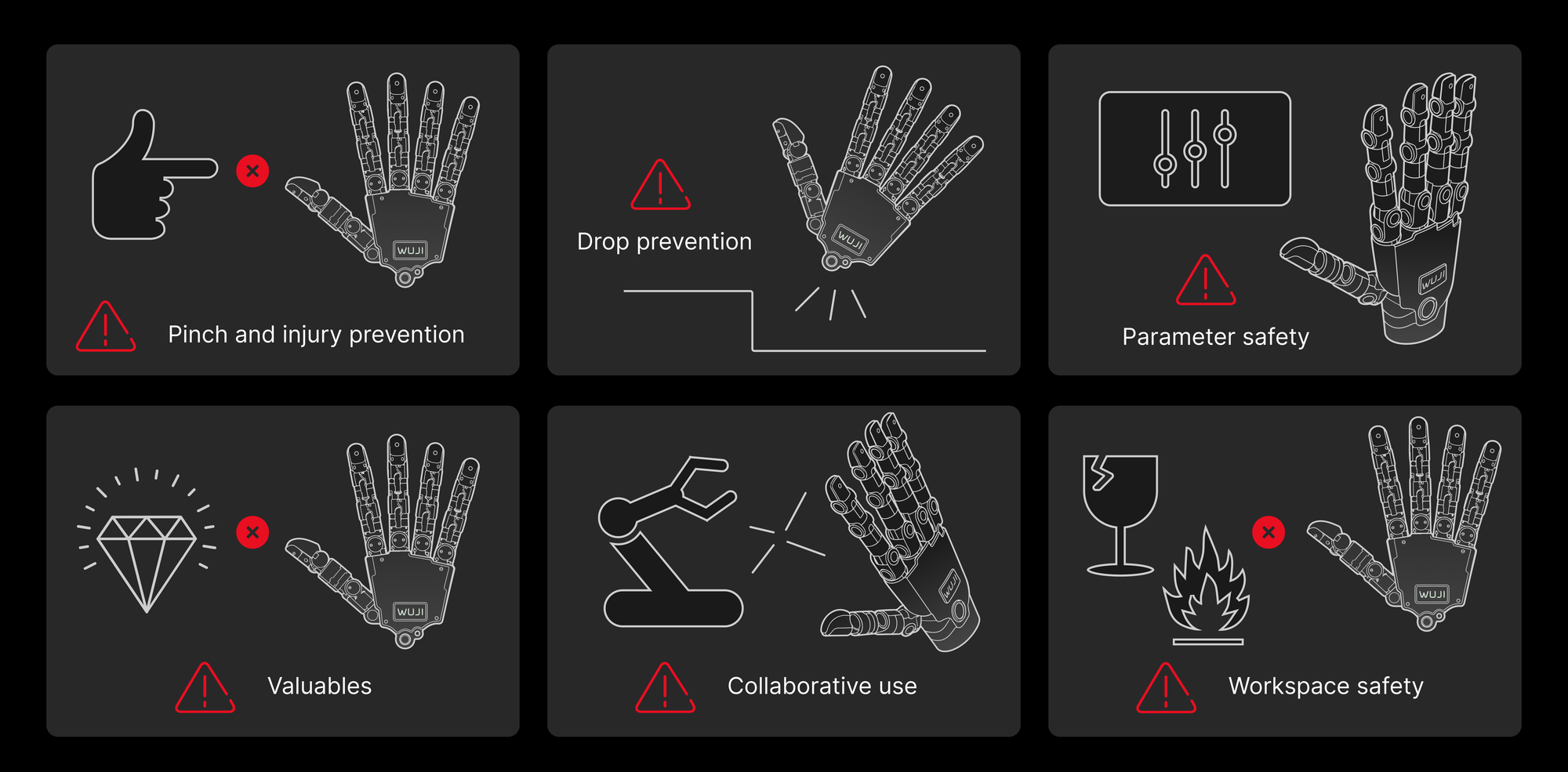
- Pinch and injury prevention: Never reach toward or bring your body near Wuji Hand 2 while it moves. Take care to avoid pinch injuries.
- Drop prevention: Prevent drops during handling, placement, or operation. A drop can damage structural parts, joints, and internal components.
- Parameter safety: Before changing default motion parameters, make sure it’s safe, to avoid accidental injury.
- Valuables: Don’t grasp fragile or high-value objects, to avoid losses.
- Collaborative use: Prevent collisions when working with robot arms or other equipment.
- Workspace safety: Keep the workspace clear of fragile, flammable, or other hazardous items.
Environmental Requirements
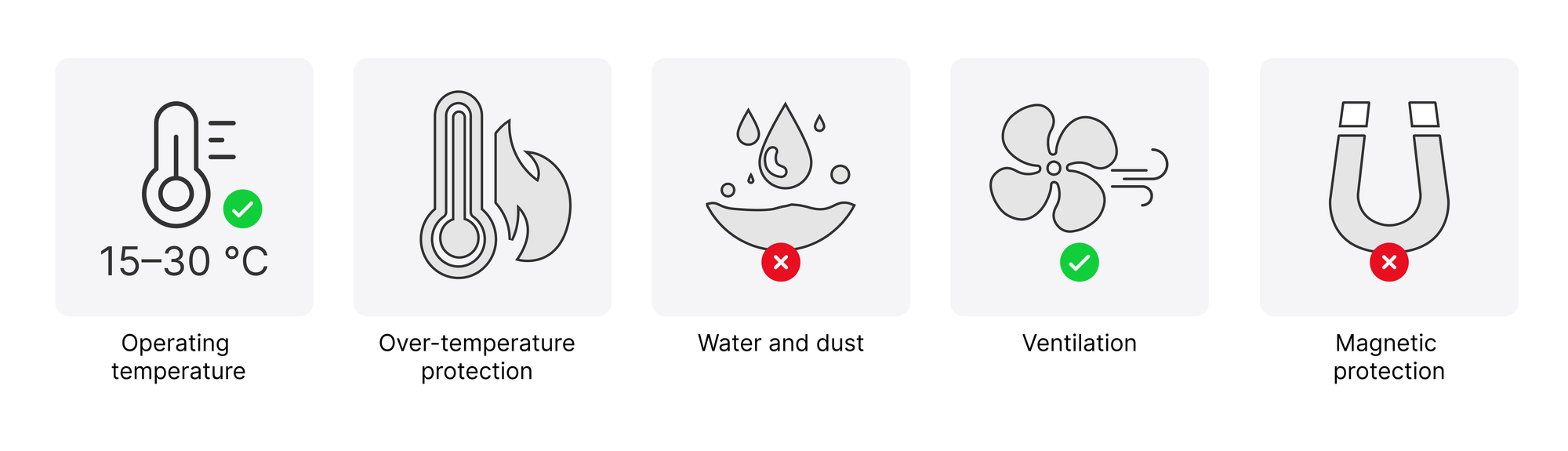
- Operating temperature: Use at room temperature (15–30 ℃).
- Over-temperature protection: Wuji Hand 2 has thermal protection.
- Water and dust: Use the hand only in a dry, clean environment. Keep out liquids, oil mist, and dust.
- Ventilation: Leave enough space around Wuji Hand 2 for heat dissipation.
- Magnetic protection: Keep the joint areas away from metal or magnetic objects to avoid encoder interference or magnet damage.
Cable and Flex-Cable Protection
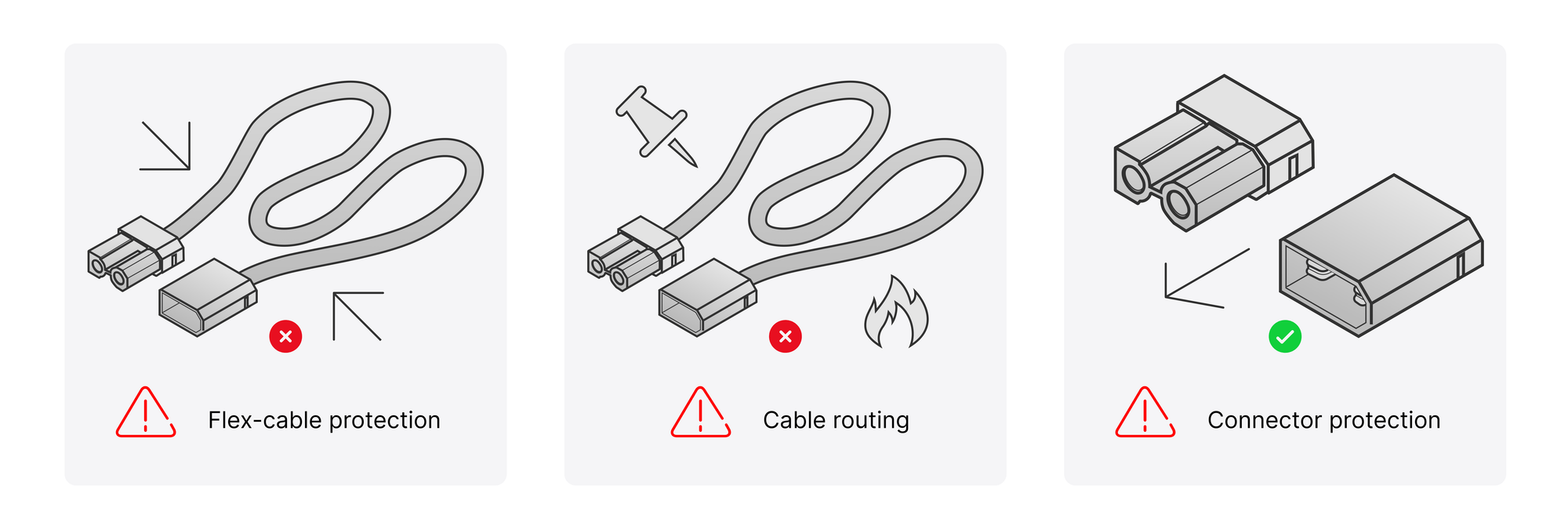
- Flex-cable protection: The flex cables on the finger surface are fragile. Keep the soft pad and skin fitted at all times to avoid scratching, squeezing, or impact.
- Cable routing: Avoid pulling and sharp bends. Leave slack and keep cables away from sharp edges, heat sources, and moving parts.
- Connector protection: Pull data cables along their axis. Don’t lift or pull them sideways, to avoid connector damage.
Capability Boundaries and Items Not Yet Provided
Soft Pad and Skin
- Always run the hand with the skin fitted. Never run it without the skin, which you can remove and replace yourself.
- Fingertip soft-pad hardness is still being tuned, and the skin design isn’t finalized.
- Soft-pad contact properties, surface friction, appearance, and feel will keep evolving.
- Don’t take the current prototype’s feel, appearance, and soft-pad life as a reference for the final product.
Thermal
- The thermal design is still iterating.
- Temperature rise, surface temperature, and throttling behavior under long continuous operation aren’t verified yet.
- Don’t run long full-load or high-load continuous tests on the 2.2 prototype.
Reliability and Durability
- Whole-unit reliability testing is ongoing.
- 2.2 makes no guarantee on durability, life, drop, vibration, or shock.
- Contact your point of contact immediately if a prototype is damaged.
Motor Load Capacity
- Whole-hand motor peak force, rated force, and load curves may change later.
- The prototype’s measured load values aren’t committed external values, and they aren’t a basis for design or purchasing decisions.
Joint Zero Calibration
- Joint zero-calibration accuracy is still being optimized. The prototype may show larger-than-expected zero errors.
- Don’t take the prototype’s zero accuracy as a reference for the final product.
Joint Back-Drive and Torque Transparency
- Back-drive torque consistency across joints is still being tuned.
- Estimating external joint torque from joint current: the forward path exists in 2.2, but the hardware consistency and calibration accuracy it relies on haven’t converged, and closed-loop performance isn’t verified.
- In 2.2, don’t use joint current readings to judge external contact force or torque. Don’t take these values as a reference for the final product.